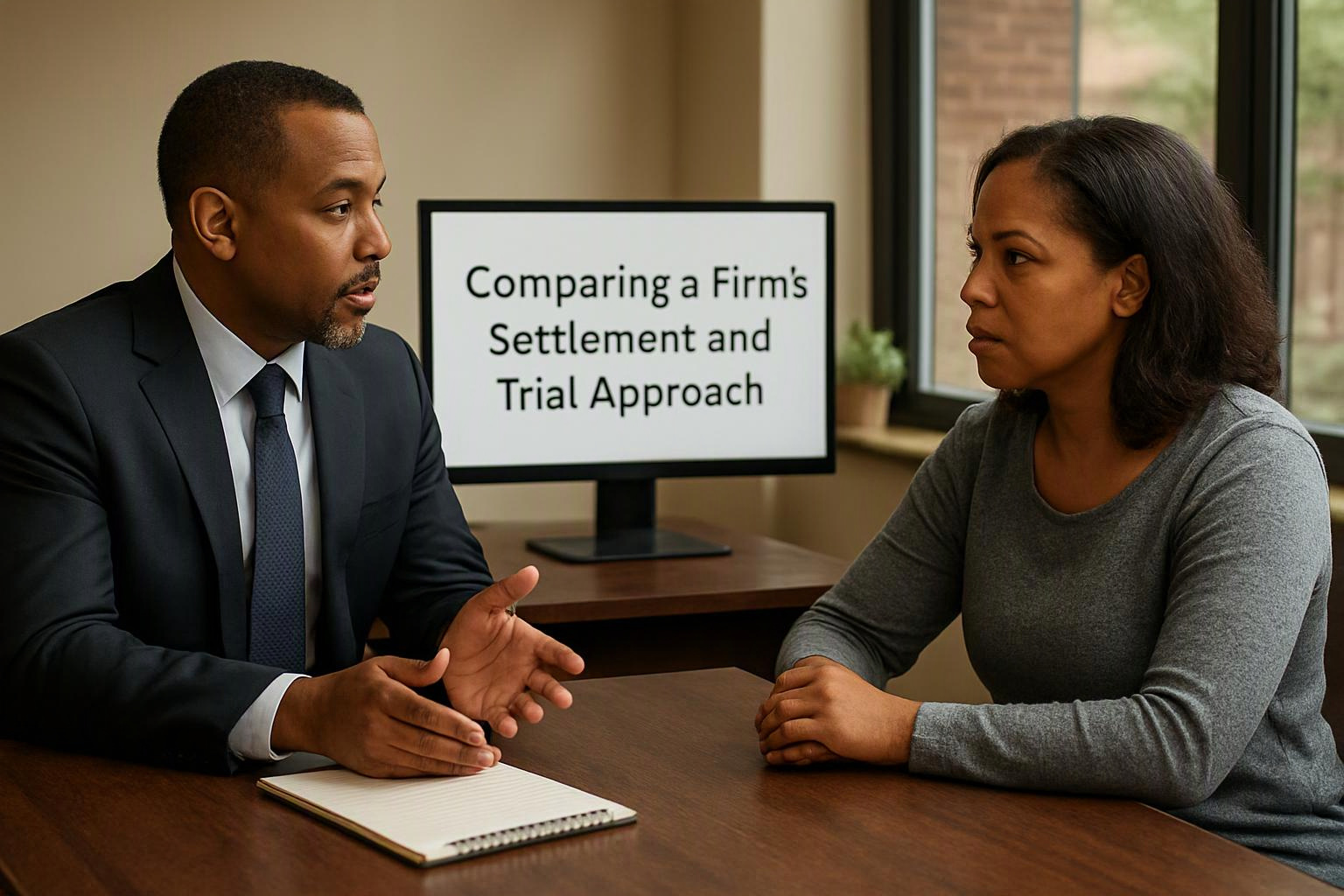
Comparing a Firm’s Settlement and Trial Approach
Personal injury lawyer settlement versus trial experience depends on case value, evidence, liability, damages, and negotiation strength; Atlanta Auto Law evaluates those factors, pursues a reasonable settlement, and prepares the claim for trial when necessary.
Written by Ronnie Mabra
Request an EstimatePersonal injury claims generally require a strategy that fits the evidence and the client’s goals. We compare negotiation and litigation options so the client can make an informed decision.
Learn more about our approach to Personal injury claims generally, including how we assess liability, causation, damages, and available evidence.
Author: Ronnie Mabra
Do Personal Injury Lawyers Settle Cases or Take Them to Trial?
Personal injury lawyers may settle claims or take them to trial, and the appropriate path depends on the evidence, liability, damages, insurance position, and settlement offer.
A settlement is a negotiated resolution with the insurance company or another responsible party. A trial asks a judge or jury to decide disputed issues after litigation and courtroom preparation.
We evaluate the personal injury claim as it develops. Strong trial readiness can improve settlement leverage, while a reasonable settlement offer may resolve the matter without continued courtroom work.
Settlement and Trial Compared at a Glance
Settlement usually offers greater control over outcome and timing, while trial offers a court decision when negotiations do not produce an acceptable resolution.
The right choice depends on case suitability, the strength of the evidence, and the client’s willingness to continue through litigation.
| Factor | Settlement | Trial |
|---|---|---|
| Cost | Often involves lower litigation expense, but total cost depends on case complexity, evidence, negotiations, and dispute activity. | Can involve higher litigation expense because of discovery, hearings, experts, motions, preparation, and courtroom work. |
| Timeline | May resolve after evidence review and negotiations, with timing controlled by case development and insurer cooperation. | Usually requires additional preparation and court scheduling after settlement efforts fail. |
| Maintenance | Requires reviewing release terms, resolving applicable liens, and completing settlement administration. | Requires continued evidence preservation, preparation for testimony, discovery participation, and communication through court proceedings. |
| Best for | Cases where liability and damages can be evaluated and the offer fairly reflects the claim. | Cases where liability, damages, or legal responsibility remain disputed and a fair resolution cannot be reached through negotiation. |
What Advantages Does a Personal Injury Settlement Offer?
A personal injury settlement offers a negotiated resolution when the agreement adequately addresses the client’s claim and the client understands the release and payment terms.
Best for: Claims where the evidence supports liability and damages and the negotiated result fairly reflects the claim.
What Advantages Does Taking a Personal Injury Case to Trial Offer?
A personal injury trial offers a formal process for presenting disputed evidence and asking the court or jury to decide liability and damages when settlement negotiations fail.
Trial creates a structured setting for witness testimony, documents, expert evidence, cross-examination, and legal arguments. A judge or jury evaluates the proof under courtroom rules.
Best for: Claims where the potential recovery and disputed issues justify continued litigation and a negotiated resolution is inadequate.
How Should You Compare a Personal Injury Lawyer’s Trial Experience?
You should compare trial experience by asking how the lawyer evaluates evidence, prepares witnesses, handles discovery and motions, explains courtroom risks, and uses trial readiness during settlement negotiations.
We connect trial preparation to the actual disputed issues in the claim. Courtroom experience matters because it affects case evaluation, witness preparation, motion practice, and settlement leverage.
What Happens When the Insurance Company Refuses a Reasonable Offer?
When an insurance company refuses a reasonable offer, the personal injury claim may move toward litigation while the evidence, damages, negotiation history, and available legal remedies are reviewed.
We do not treat an insurer’s refusal as the end of the claim. We identify the reason for the refusal and decide whether stronger proof, further negotiation, or litigation best serves the case.
How Does a Personal Injury Claim Proceed When Settlement Talks Fail?
When settlement talks fail, a personal injury claim can proceed through litigation steps that develop the evidence, narrow disputed issues, and prepare the case for trial or a later settlement.
Settlement remains possible during litigation when the parties reassess the evidence and risks. Our team keeps the client informed as the case moves through each stage.
What Should You Ask Before Choosing a Settlement or Trial Strategy?
Before choosing a strategy, you should understand the evidence, disputed issues, available insurance, expected litigation work, settlement terms, and risks of asking a court or jury to decide the claim.
Questions About Settlement and Trial Strategy
What does trial readiness mean in a personal injury case?
Trial readiness means the personal injury case is being prepared for courtroom presentation even while settlement negotiations continue. Atlanta Auto Law reviews liability evidence, damages documentation, witnesses, experts, discovery, depositions, motions, and trial themes so the client can evaluate settlement leverage and trial risk.
Can a personal injury case still settle after a lawsuit is filed?
Yes, a personal injury case can still settle after a lawsuit is filed. Litigation may give both sides more information through discovery, depositions, mediation, and motions, which can support a later settlement agreement.
What makes an insurance settlement offer unreasonable?
An insurance settlement offer may be unreasonable when it does not fairly account for supported liability, causation, medical records, economic damages, non-economic damages, or the risks shown by the evidence. We compare the offer with the documented claim and the likely results of continued litigation.
Who decides the outcome of a personal injury trial?
A judge or jury decides the outcome of a personal injury trial, depending on the type of trial and the issues presented. The court applies legal rules, while the fact finder evaluates witness testimony, documents, expert evidence, liability, causation, and damages.
What evidence is most important when settlement negotiations fail?
The most important evidence depends on the disputed issues, but useful proof may include medical records, accident evidence, witness testimony, employment records, photographs, expert opinions, and evidence of the other party’s responsibility. We organize the evidence around liability, causation, and damages.
Choose a Strategy Built for Your Claim
Settlement and trial decisions should follow a careful review of evidence, case costs, legal fees, insurance coverage, and the client’s objectives. Atlanta Auto Law evaluates those factors, explains the available paths, and prepares each claim for an informed resolution.
Contact Atlanta Auto Law to discuss your personal injury claim and the strategy that fits its disputed issues.