Serious Injury Claim Mistakes: Documenting Treatment, Work, and Daily Impact
Serious injury claim mistakes often involve incomplete treatment records, unsupported work losses, and vague daily-impact notes. Atlanta Auto Law helps organize medical, employment, and personal evidence before settlement decisions are made.
Written by Ronnie Mabra
Request an Estimate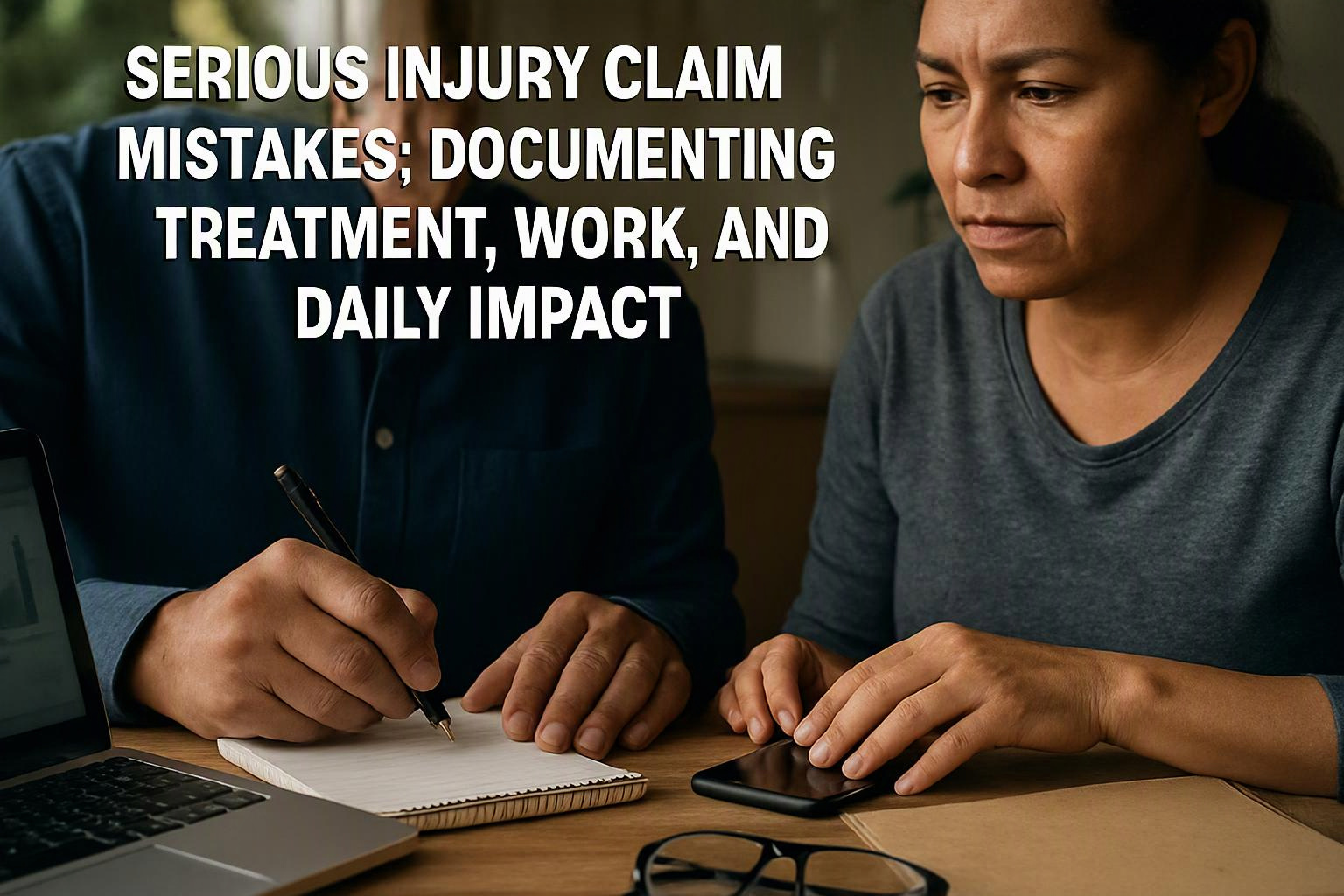
Serious injury claim documentation requires evidence of treatment, work-related losses, and daily-life impact before settlement. Our team connects those records so the claim tells one consistent story.
Author: Ronnie Mabra
Why Documentation Matters Before a Serious Injury Settlement
Serious injury claim documentation matters because settlement decisions depend on how clearly the records connect the injury to treatment, work limitations, expenses, and changes in daily life.
Medical treatment can show the nature of the injury and the care already provided. Lost income records can show work-related harm. Notes about daily activities can explain pain, mobility problems, cognitive changes, and the need for help.
Future medical needs also require careful support. We review the available records before a settlement offer is accepted so the evidence addresses both current damages and possible future care.
The Records a Serious Injury Claim Should Connect
A serious injury claim should connect medical records, financial losses, employment effects, and daily limitations into one consistent account of the injury's impact.
Each record serves a different purpose. Together, the records can support causation, damages, and the effect of the injury on ordinary life.
| Record | What it can show | How we use it |
|---|---|---|
| Medical records | Diagnosis, symptoms, treatment, and progress | We build a treatment timeline and review causation. |
| Medical bills | Charges connected to medical care | We organize expenses as part of damages documentation. |
| Work records | Absences, reduced capacity, and lost wages | We compare employment records with medical restrictions. |
| Caregiver records | Help with personal care and household services | We identify unpaid support that reflects functional impairment. |
| Daily activity journal | Pain, limitations, and changes in routine | We compare daily notes with treatment and other claim evidence. |
Mistake: Waiting Too Long to Document Symptoms and Treatment
Waiting too long to document symptoms can create gaps between the injury, medical appointments, and the treatment timeline. People may forget pain changes, missed appointments, or neurological symptoms as time passes.
The cost is weaker detail about how symptoms began and changed. We correct this problem by organizing appointment notes, diagnoses, prescriptions, referrals, and symptom reports into a clear chronology.
Mistake: Keeping Medical Records Separate From Daily Limitations
Keeping medical records separate from daily limitations can hide how an injury affects activities of daily living. A record may describe mobility or cognitive limitations without explaining what those limits mean at home.
The cost is a claim that proves treatment but does not fully show functional impairment. We connect medical findings to bathing, dressing, walking, concentration, and other ordinary tasks.
Mistake: Describing Pain Without Recording What You Cannot Do
Describing pain without recording lost abilities leaves functional capacity unclear. Pain symptoms matter, but the claim also needs facts about household tasks, personal care, recreation, and movement.
The cost is vague proof of pain and suffering. We use specific daily examples to show how the injury changed activities and independence.
Mistake: Documenting Missed Work Without Showing the Employment Loss
Documenting missed work without showing the employment loss does not fully support lost wages or reduced earning capacity. Attendance records, pay records, restrictions, and employer documentation help explain what work was missed and why.
The cost is an unsupported wage claim. We compare work absence records with medical restrictions and employment records to organize the loss evidence.
Mistake: Leaving Out Unpaid Care and Household Help
Leaving out unpaid care and household help can conceal the injury's effect on personal care and household services. Family support may include transportation, meal preparation, supervision, cleaning, or assistance with basic tasks.
The cost is an incomplete account of the services the injury made necessary. We document caregiver assistance and replacement services through consistent descriptions and supporting records.
Mistake: Ignoring Future Medical Treatment and Long-Term Needs
Ignoring future medical treatment can leave future medical needs out of the claim. Rehabilitation, assistive devices, life-care needs, and permanent impairment may require evidence beyond current bills.
The cost is a damages analysis that focuses only on past care. We review records for future care recommendations and long-term effects before settlement decisions are made.
Mistake: Settling Before the Injury's Full Impact Is Known
A serious injury claim should not be settled before the available evidence reasonably explains future treatment, work effects, and lasting daily limitations.
Signing a settlement agreement may require a claim release that affects future damages. The risk is giving up rights before maximum medical improvement or the nature of a permanent injury is reasonably understood. We review the medical history, future care information, and settlement terms before a release of claims is considered.
Mistake: Allowing Inconsistent Statements to Weaken the Claim
Inconsistent statements can create questions about credibility. Differences between a claim statement, medical history, social media post, and conversation with an insurance adjuster may be used to challenge the account.
The cost is doubt about causation and damages. We compare the available records so the claim explains changes in symptoms without hiding relevant facts.
Mistake: Sending Records Without Explaining the Losses They Prove
Sending records without explaining the losses they prove can make a claim file difficult to evaluate. Medical bills alone do not explain causation, work loss, daily limitations, or future care.
The cost is a stack of documents without a clear damages analysis. We organize medical bills, wage loss evidence, and personal records around the losses each item supports.
How to Track Treatment, Work, and Daily Impact
Tracking treatment, work, and daily impact works best when each entry connects a date, an event, and the effect of the injury. Consistent records help us compare personal notes with medical and employment evidence.
Use a simple record system and save related documents together. A symptom journal can support the treatment timeline when it stays factual and describes changes in ordinary activities.
How Atlanta Auto Law Reviews Serious Injury Documentation
Atlanta Auto Law reviews serious injury documentation by organizing treatment history, work losses, expenses, and daily limitations into evidence that supports the claim's full impact.
We begin with a medical chronology that places symptoms, appointments, diagnoses, and treatment in order. We then compare that chronology with employment records, bills, caregiver documentation, and daily notes.
Our damages analysis considers past losses and future medical needs. This process can apply to Traumatic Brain Injury Claims, Spinal Cord Injury Claims, Burn Injury Claims, Amputation Injury Claims, and Paralysis Injury Claims.
When to Call Atlanta Auto Law About a Documentation Problem
Call Atlanta Auto Law when a serious injury creates lasting limitations, the claim involves future medical needs, or the available records do not clearly show work and daily-life losses.
Our team can review the claim evidence before missing records or an early settlement offer creates a larger problem.
What to Bring to a Serious Injury Claim Review
Bring medical records, medical bills, employment records, insurance correspondence, and daily impact notes to a serious injury claim review.
Include appointment notes, prescriptions, referrals, attendance records, pay records, expense receipts, and written descriptions of caregiver assistance. We use these supporting records to evaluate treatment, causation, damages, and the injury's effect on daily life.
Do not alter personal notes after the fact. Bring the records as they exist so our team can identify gaps, explain inconsistencies, and plan the next step.
Questions About Serious Injury Claim Documentation
What records should I keep for a serious injury claim?
Atlanta Auto Law recommends keeping medical records, medical bills, employment records, insurance correspondence, expense receipts, caregiver notes, and a symptom journal. These records help connect treatment, work loss, and daily limitations.
How do I document missed work after an injury?
Document missed work with attendance records, pay records, employer documentation, medical restrictions, and a work absence log. The records should show the connection between the injury, the restriction, and the employment loss.
Can a daily activity journal support a personal injury claim?
Yes, a daily activity journal can support a personal injury claim by recording pain, mobility problems, cognitive limitations, personal care needs, and changes in household activities. Specific and consistent entries are more useful than general statements.
What happens if my medical records do not show all of my symptoms?
Missing symptoms in medical records can create questions about timing, severity, and causation. Keep a symptom journal, tell medical providers about changes, and bring the records to our team so we can identify gaps and explain the available evidence.
Should I give an insurance adjuster my complete medical history?
No, do not provide a complete medical history without understanding how the request relates to the injury claim. An insurance adjuster may use unrelated information to question causation or damages. We review requests for records and statements before you respond.
Atlanta Auto Law helps injured people organize claim evidence before settlement decisions are made. Contact us to discuss treatment records, lost wages, future medical needs, and daily limitations.
Contact Atlanta Auto Law