Shared Fault and Pre-Existing Conditions in an Injury Claim
Shared fault and pre-existing conditions can affect a personal injury claim, but they do not automatically defeat recovery; Atlanta Auto Law examines fault, medical records, and how the accident affected the injury.
Written by Ronnie Mabra
Request an Estimate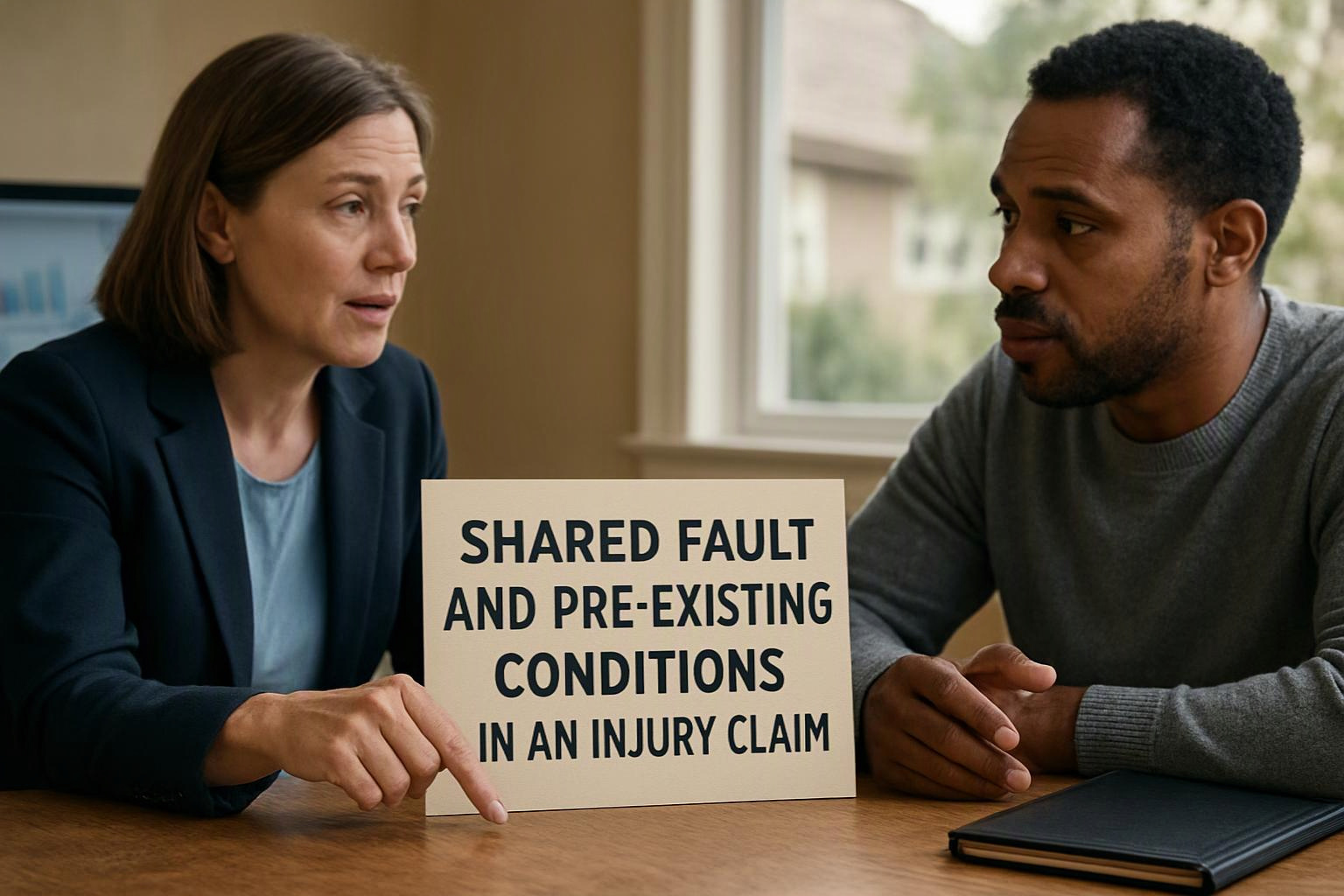
How Shared Fault and Pre-Existing Conditions Affect an Injury Claim
Personal injury claims are evaluated by separating fault for the accident from the medical cause of the claimed harm. Atlanta Auto Law reviews both issues together so the evidence shows what happened before the accident, what happened during it, and what changed afterward.
Shared fault can reduce an injury recovery when the claimant also contributed to the accident. A pre-existing condition can raise questions about causation and damages, but it does not automatically erase the effect of a new accident.
We connect the accident facts, medical history, and treatment records to the claimed losses. That review helps address arguments about negligence, liability, and the amount of compensation supported by the evidence.
Can You Recover If You Were Partly at Fault for the Accident?
Partial fault does not automatically prevent recovery, but comparative fault can affect compensation based on how responsibility is allocated under the applicable law.
Negligence evidence may show that another driver or party caused the accident while also showing that the injured person made a contributing mistake. The insurance company may use that evidence to argue for a lower share of liability.
We examine traffic facts, statements, photographs, reports, and other liability evidence before addressing fault allocation. Our review focuses on the conduct that caused the accident and the damages that the evidence connects to it.
What Happens When an Accident Worsens a Pre-Existing Injury?
Aggravation of injury may support a claim when medical and factual evidence connects the worsened condition to the accident.
A pre-existing medical condition does not mean that every later symptom came from the earlier condition. An accident can cause a new injury, intensify prior pain, or change the treatment needed for an existing problem.
We compare the person’s prior symptoms with post-accident symptoms, examinations, diagnoses, and treatment changes. The key question is whether the evidence shows a causal connection between the accident and the accident-related worsening.
Shared Fault and Pre-Existing Conditions: What Must Be Proven?
A personal injury claim must connect the accident to the injury and address the claimant’s role in causing the accident. The evidence also must respond to an insurance defense that presents an earlier condition as the cause of the current harm.
Our team organizes fault evidence and medical evidence separately, then shows how the two issues interact in the claim.
| Issue | What the issue concerns | Evidence that may address it | Potential effect on the claim |
|---|---|---|---|
| Shared fault | Whether the injured person contributed to the accident | Accident reports, photographs, witness statements, and other liability evidence | A possible reduction in recoverable compensation |
| Pre-existing condition | Whether symptoms or a diagnosis existed before the accident | Prior medical records, treatment history, and symptom descriptions | A dispute about the source and extent of the claimed injury |
| Causation | Whether the accident caused a new injury or worsened an existing one | Medical examinations, diagnoses, symptom progression, and treatment changes | Affects which damages can be linked to the accident |
| Insurance defense | Arguments that fault or an earlier condition explains the claimed harm | Claim investigation materials, medical history, and statements about the accident | Delay, dispute, or pressure to accept less compensation |
How Do Medical Records Distinguish a New Injury From an Old Condition?
Medical records distinguish a new injury from an old condition by documenting symptoms, examinations, diagnoses, treatment changes, and the timing of those changes.
Prior records can show whether pain, limited movement, or another symptom existed before the accident. Post-accident records can show new symptoms, a worsened condition, a different diagnosis, or a change in the treatment plan.
We look for consistent descriptions across medical visits and compare them with the accident facts. Treatment records can support medical causation when they show a meaningful change after the accident and connect that change to the reported event.
Can an Insurance Company Question Whether the Accident Caused the Injury?
Yes, an insurance company can question causation when prior symptoms, earlier treatment, or shared fault creates another explanation for the claimed harm.
A claims adjuster may compare the medical history with the post-accident diagnosis and treatment. The adjuster may also examine statements, accident reports, photographs, and other parts of the claim investigation.
We address a causation dispute by organizing the timeline and identifying the records that show the person’s condition before and after the accident. We also respond to liability arguments that could affect the value of a car accident claim.
What Evidence Helps Address Both Issues?
Evidence helps address both shared fault and medical causation by showing how the accident happened and how the injury changed afterward. Our team gathers records that support both parts of the claim.
How We Review Shared Fault and Pre-Existing Conditions
Atlanta Auto Law reviews shared fault and pre-existing conditions by separating accident facts, medical history, and claim documentation before building a settlement strategy.
When Should You Discuss a Claim With Atlanta Auto Law?
You should discuss a claim with Atlanta Auto Law when shared fault, prior medical issues, or an insurer’s causation questions make the value or viability of the claim uncertain.
Early records can help preserve the timeline between the accident, new symptoms, diagnosis, and treatment. We review Personal Injury Claims and car accident claims by focusing on the evidence that connects the event to the damages.
Our review can also help clarify how an aggravation of injury differs from a separate prior condition. Contact us for through our contact page.
Questions About Shared Fault and Pre-Existing Injuries
Does having a pre-existing condition prevent a personal injury claim?
No, a pre-existing condition does not automatically prevent a personal injury claim. Atlanta Auto Law examines whether the accident caused a new injury or aggravated the prior condition, using medical records and other evidence to evaluate causation and damages.
What if my medical records show symptoms before the accident?
Medical records showing earlier symptoms do not decide the claim by themselves. The records can help compare the prior condition with new symptoms, changed diagnoses, increased treatment, or an accident-related worsening after the event.
Can an insurer deny an injury claim because I had prior treatment?
No, prior treatment does not by itself establish that the accident caused no injury. An insurer can dispute causation, but the treatment timeline, medical opinions, and changes after the accident may support the claimed injury.
Does shared fault affect compensation for medical expenses?
Yes, shared fault can affect compensation for medical expenses when the applicable law reduces recovery based on the claimant’s assigned responsibility. The medical expenses must also be connected to the accident or the accident-related worsening.
What should I do if an insurance adjuster blames my old injury?
Gather the accident records, prior medical history, post-accident treatment records, and information about new symptoms before responding to the adjuster’s position. Discuss the claim with Atlanta Auto Law so we can evaluate the causation dispute and the available liability evidence.
Atlanta Auto Law reviews shared fault, pre-existing conditions, medical causation, and damages so you can understand how the evidence may affect your claim.
Author: Ronnie Mabra