Evidence-Gathering Mistakes After a Crash
Evidence-gathering mistakes after a crash can weaken a personal injury claim, but Atlanta Auto Law can review available records, photos, witness details, and medical documents to identify what still supports the claim.
Written by Ronnie Mabra
Request an Estimate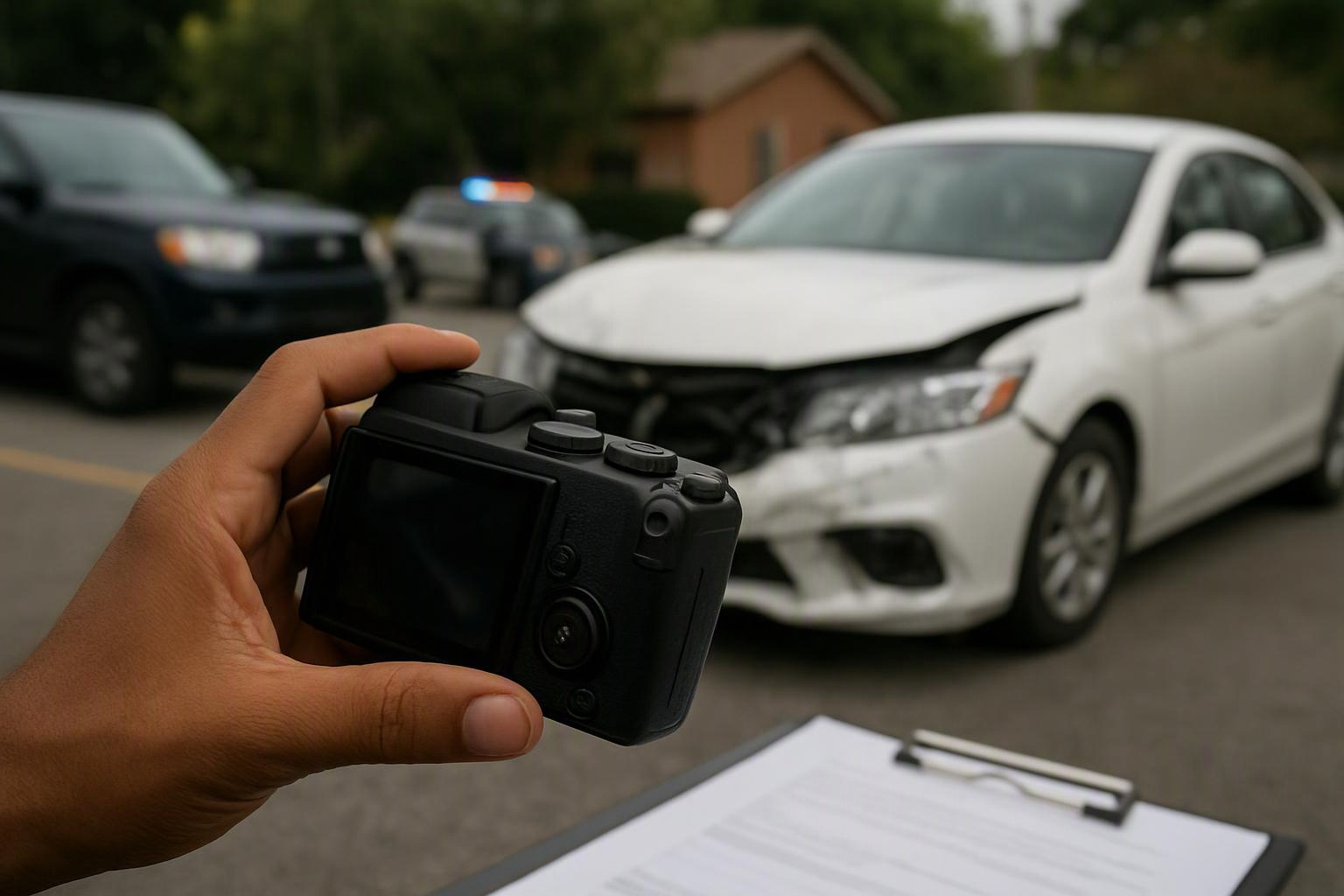
Accident scene documentation can affect the evidence supporting a personal injury claim. Our team helps organize available crash records so the claim can be evaluated from the facts that remain.
Author: Ronnie Mabra
Why Accident Scene Documentation Matters to a Personal Injury Claim
Accident scene documentation preserves details that may help connect the crash, the injuries, and the losses claimed.
The accident scene may change quickly after vehicles move, debris is cleared, or road conditions shift. Photos, physical evidence, medical records, and an insurance claim file can help show liability, causation, and property damage.
We compare the available records for consistent facts. That review can help identify gaps before an insurance adjuster uses missing or unclear information to challenge the claim.
What Evidence Should You Collect After a Crash?
Crash evidence should cover the scene, the people involved, the vehicles, the reported facts, the injuries, and the resulting losses.
Collecting evidence does not require you to confront another driver or delay emergency care. Safety comes first, and our team can review what was preserved afterward.
Quick Reference: Documentation Mistakes and Better Next Steps
The most useful correction depends on which evidence is missing, altered, delayed, or unsupported. The table below provides a practical starting point for evidence preservation.
| Documentation mistake | Possible claim impact | Better next step |
|---|---|---|
| No scene photos | Vehicle position and roadway facts may be harder to establish | Preserve witness details, reports, and vehicle evidence |
| No witness contact details | Independent accounts may be difficult to locate | Record names, messages, and any available identifying information |
| Delayed medical documentation | The connection between the crash and symptoms may be disputed | Follow medical guidance and preserve treatment records |
| Incomplete claim records | Losses and insurer responses may be unclear | Organize correspondence, bills, wage records, and repair documents |
Mistake 1: Leaving the Scene Without Taking Photos
Leaving without scene photographs can remove useful evidence about vehicle position, property damage, roadway evidence, and the surrounding accident scene. This often happens because people are shaken, injured, or focused on moving to safety.
The claim cost can include a harder liability dispute and less support for your account. If photos are missing, we preserve available police records, witness information, vehicle inspections, and other scene evidence.
Mistake 2: Photographing Only the Vehicle Damage
Vehicle-only photos may show impact damage but not traffic signs, lane markings, debris, visibility conditions, or the roadway layout. People often focus on the damaged car because that evidence seems easiest to capture.
The missing context can make fault and causation harder to explain. We review repair records, available photographs, police materials, and witness accounts to rebuild the crash setting as accurately as possible.
Mistake 3: Failing to Collect Witness Information
Witness information gives the claim an independent account of what happened. A witness may leave before you can obtain contact information because the scene is busy or because you are receiving medical care.
Missing contact details can reduce access to a useful witness statement. We preserve names, messages, photographs, police references, and other clues that may help identify independent evidence.
Mistake 4: Relying on Memory Instead of Writing Down the Facts
A crash description can become less precise as time passes, especially when pain, stress, and treatment affect memory. Driver statements, the timeline, and details about the roadway should be recorded while they are clear.
Unclear memories can create inconsistent claim statements. We compare contemporaneous notes, messages, reports, photographs, and medical records to separate known facts from later speculation.
Mistake 5: Posting Crash Details on Social Media
A social media post can become a claim statement that an insurance defense team reviews outside its original context. Posts and photographs may also contain metadata or descriptions that invite questions about the injuries or events.
Public statements can create avoidable disputes about credibility and causation. We review available posts, messages, and photographs with the rest of the claim file before addressing disputed evidence.
Mistake 6: Delaying Medical Documentation
A medical evaluation creates a record of symptoms, findings, and treatment after a crash. Delays can happen when a person expects pain to improve or is focused on work and family responsibilities.
Missing or delayed treatment records can make causation harder to prove and may affect the value of an injury claim. We organize medical records, bills, and symptom records so the treatment history is clear.
Mistake 7: Throwing Away Damaged Clothing or Safety Gear
Damaged clothing, a helmet, or other protective equipment may preserve physical evidence of the impact. People often discard these items during cleanup or replacement.
Lost physical evidence can make injury mechanics and impact severity harder to assess. We identify what remains, preserve photographs and repair records, and connect the available evidence to the medical documentation.
Mistake 8: Giving an Incomplete or Speculative Statement
An insurance adjuster may ask for a recorded statement before all crash facts and medical information are organized. Speculation about speed, distance, fault, or future treatment can create problems later.
An incomplete statement can be used to challenge liability or the scope of an injury claim. We help organize known facts and identify unanswered questions before responding to claim requests.
Mistake 9: Failing to Preserve Messages and Claim Documents
Text messages, email, insurance correspondence, repair records, and medical bills can show how the crash and losses developed. These materials may be deleted, scattered across devices, or overlooked during a claim review.
Missing claim documents can make the timeline and insurer response difficult to prove. We organize the claim file and use document preservation practices to keep relevant records available.
Can You Still Make a Claim If You Did Not Take Pictures?
Yes, a personal injury claim may still rely on witness accounts, reports, vehicle evidence, medical records, and other available documentation when scene photographs are missing.
Missing photographs may affect how the accident scene is reconstructed, but they do not automatically end a car accident claim. The same review can apply to a motorcycle accident claim, pedestrian accident claim, or bicycle accident claim.
We compare the police report, vehicle inspection, witness evidence, medical records, and insurance documents for consistent facts. That process helps identify usable proof of the crash, injury, causation, and losses.
Which Documents Should You Keep for an Accident Injury Claim?
Accident injury claim documents should show what happened, what treatment followed, what losses resulted, and how insurers responded. Keep copies in a secure location and preserve the original messages or files when possible.
These records can support both a car accident claim and other injury claims when the evidence connects the event to the losses.
When Should You Ask for Legal Help With Crash Evidence?
Ask for legal help when evidence is disputed, injuries are significant, another party blames you, or an insurer requests statements before the facts are organized.
We can review the available evidence and explain which missing records may matter most to the personal injury claim.
How Atlanta Auto Law Reviews Accident Documentation
Atlanta Auto Law reviews the available crash, witness, medical, vehicle, and insurance records to organize evidence for the personal injury claim.
Our team compares the timeline, liability evidence, injury documentation, and loss documentation for gaps or conflicts. We also review how an insurance investigation affects the claim file and whether additional preservation steps are needed.
For more information about our Car Accident Claims work, contact our team for a focused review of the available records.
What to Do Next After a Documentation Mistake
The next step is to preserve what remains, create a clear record of the crash and injuries, and organize the evidence before responding to disputed claim issues.
Atlanta Auto Law can review the records that remain and help identify practical evidence-preservation steps for the claim.
Contact Atlanta Auto Law for a claim review.
Get a Free EstimateQuestions About Crash Evidence Mistakes
What should I do if a witness leaves before I get their contact information?
Atlanta Auto Law can help preserve other identifying details, such as the witness's description, location, vehicle information, messages, or reference in the police report. We then compare those details with the remaining claim evidence.
Should I give an insurance adjuster a recorded statement after a crash?
A recorded statement should be considered carefully because incomplete or speculative answers may affect the claim. Organize the crash facts and available medical documentation before responding, and ask for legal guidance when liability or injury evidence is disputed.
How can I preserve text messages and photos for an accident claim?
Preserve the original messages, email threads, photographs, and related files without editing or deleting them. Keep copies in a secure location and provide the complete conversation or file context during claim review.
What evidence can support a claim when the police report is incomplete?
An incomplete police report can be supplemented by witness statements, scene photographs, vehicle inspection records, medical records, repair documents, messages, and insurance correspondence. We compare those sources to identify consistent facts and address disputed liability.
Related Resources
Shared Fault and Pre-Existing Conditions in an Injury Claim
Compared ToHiring a Lawyer vs Handling Your Injury Claim Yourself
Compared ToWhen to Hire a Lawyer Before Making an Insurance Claim Decision
Everything About ItEvidence in a Personal Injury Claim: Records, Photos, Video, and Expert Analysis